
In 2021, I wrote an article about recruiting into local television. I called it “Extinction Alert.”
To read it again, here is the link: Extinction Alert? — Recruiting Into Local Television Today. Is “The Great Resignation” Real?
At the time, I described myself as a canary in the coal mine.
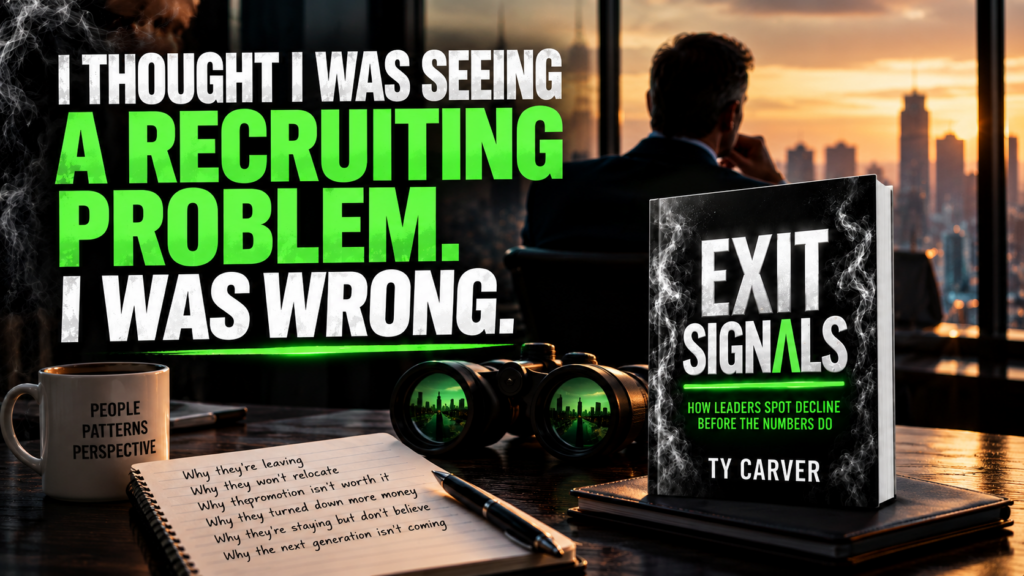
I thought I was writing about recruiting.
I wasn’t.
I was writing about decline. I just didn’t know it yet.
For more than 30 years, I’ve made a living talking to people about work. A lot of those conversations happen when nobody else is listening. People tell recruiters things they may not tell their boss, their coworkers or anyone sitting around the executive table. They tell you why they’re leaving, why they won’t relocate, why a promotion is no longer worth it, why they turned down more money, why they’re staying even though they no longer believe in the company, and why younger people aren’t interested in careers previous generations fought to get into.
One conversation doesn’t tell you much. A few dozen might get your attention. But after thousands of them, patterns begin to emerge.
That’s what was happening in local television.
The people were telling me things that weren’t necessarily showing up in a spreadsheet yet. Candidates were becoming more reluctant to relocate for jobs that once attracted people from across the country. Some were questioning whether the next promotion justified uprooting their families. Others were looking at consolidation, hubbing, downsizing and rapidly changing technology and asking a question that would have been almost unthinkable earlier in their careers:
Why would I take that risk?
And not everyone was leaving. Some were staying, but something had changed. They didn’t believe what they used to believe.
Perhaps even more concerning, I was seeing something happening at the other end of the career pipeline: fewer people seemed to want in.
That is different from turnover. Turnover is people leaving your organization. Something potentially more serious happens when the next generation stops choosing your path in the first place.
The Fireground Taught Me the Other Half
There is another part of my life that, on the surface, has absolutely nothing to do with recruiting.
For 15 years, I was a volunteer firefighter. I also served as an officer on a first-out engine company.
The fireground teaches you to pay attention. Not eventually. Now.
Conditions can change while you are still operating on your original assumptions. Smoke changes. Heat changes. The building changes. What looked manageable a few minutes earlier can become something very different, and the longer you continue operating from what was true instead of what is true, the smaller your margin becomes.
You don’t wait for the roof to collapse before acknowledging that conditions have deteriorated.
By then, the signal isn’t a signal anymore.
It’s an event.
Years later, I realized recruiting had been teaching me a remarkably similar lesson. The signals were different, but the discipline was the same. Instead of smoke, heat and changing building conditions, I was watching people: who was leaving, who wouldn’t come anymore, who stopped believing, who changed their habits, who was still sitting in the same chair but had mentally moved on, and who never entered the profession at all.
Recruiting taught me to watch people. The fire service taught me to watch conditions.
Both taught me not to wait until the outcome becomes obvious.
And yeah, there are some pretty wild firefighting stories in the book, too. I came close to not making it home more than once. Legit.
That’s Why I Wrote EXIT SIGNALS
Businesses are very good at measuring things. Revenue. Ratings. Margins. Turnover. Applications. Market share. Engagement.
We build dashboards. We study reports. We hold meetings about the reports. Then, sometimes, we build more reports explaining what happened to the numbers in the previous reports.
There’s just one problem.
By the time some forms of decline become measurable, the people closest to the organization may have been feeling them for months or even years.
That’s the idea I couldn’t get away from:
The numbers aren’t wrong. They’re late.
Not always. But often enough that leaders should be paying attention to what happens before the numbers move.
That idea eventually became EXIT SIGNALS: How Leaders Spot Decline Before the Numbers Do.
The book identifies five patterns: Talent Flight, Habit Erosion, Belief Erosion, Leadership Lag and The Missing On-Ramp.
Talent Flight happens when your strongest people begin leaving, disengaging or refusing opportunities they once would have taken. Habit Erosion begins when customers, employees or audiences start changing behaviors the organization has taken for granted. Belief Erosion appears when people may still be there physically, but no longer believe the story the organization is telling about itself.
Leadership Lag happens when leadership continues solving the problem that existed yesterday while the environment has already moved somewhere else. And The Missing On-Ramp appears when the next generation stops entering the system altogether.
I didn’t invent those five signals sitting in a conference room. I found them by looking backward at what I had been hearing and seeing for years.
And Yes, Local Television Gets Hit Pretty Hard
Anyone who has read Carver Corner knows I love the television business. I spent nearly 15 years working closely with its executives and talent. I built a recruiting business around it. Some of the smartest and most talented people I know work in it.
That is precisely why I’m not interested in pretending everything is fine.
Local television is the central case study in EXIT SIGNALS because I’ve had a front-row seat to the human side of its structural change: consolidation, hubbing, shrinking newsrooms, changing audience habits, recruiting challenges, technology replacing or combining jobs, experienced people questioning whether the next move is worth the risk, and a generation that did not grow up with the same relationship to local television that many of us did.
Some of those changes are necessary adaptations. Some may make the business stronger. Some may not.
But ignoring the human signals because the current quarter still looks acceptable is a dangerous way to find out.
And this is not just a television book.
Television is where much of the evidence became impossible for me to ignore. The framework itself applies much more broadly. Industries change. Technology changes. Customers change. Employees change. Entire career paths change.
The specific symptoms may differ, but the leadership question remains the same:
What are the people closest to your organization already telling you that your numbers haven’t told you yet?
Why Now?
Because I think too many organizations wait for proof.
By the time the proof arrives, options have disappeared.
That’s true in business, and it was certainly true on the fireground.
There is a point when smoke is information, and there is a point when smoke becomes fire.
Those are very different moments.
Leadership lives in the space between them.
That’s why I wrote this book. Not to predict which companies or industries will fail. Not to declare that every change is decline. And certainly not because every warning signal means disaster is coming.
I wrote it because signals create an opportunity.
If you recognize them early enough, you still have choices. If you wait until everyone agrees there is a problem, you may have considerably fewer.
People see it. Few act. Leaders change it.
EXIT SIGNALS: How Leaders Spot Decline Before the Numbers Do publishes Tuesday, October 13.
If you’re planning to read it, I’m going to ask you for one favor: buy the Kindle edition on October 13.
There’s a reason for that. Concentrating purchases on launch day gives the book its best opportunity to gain visibility inside Amazon and reach readers who don’t already know me.
I’ll remind you when we get there.
After spending more than 30 years listening to people tell me what was changing before their organizations could measure it, there is one idea I hope leaders take away from the book:
Listen earlier.
The people may already be telling you what comes next.
Want to see whether any of the five signals are already showing up in your organization?
Get the FREE five-minute EXIT SIGNALS Snapshot:

About Carver Talent
Carver Talent specializes in recruiting high-impact leaders across local television, digital media, revenue leadership, news management and broadcast operations nationwide.
We understand the media business because we work inside its talent market every day — talking with the leaders running stations, newsrooms, sales organizations and operations, including many who aren’t actively looking for their next opportunity.
In a media landscape changing this quickly, finding the right leader matters more than ever.
Ty Carver is the Founder and CEO of Carver Talent and brings more than 30 years of recruiting, HR, sales and leadership experience, including the last 15 years focused specifically on the broadcast media industry.
Before founding Carver Talent, Ty served as Head of Talent Acquisition for Raycom Media, where he developed deep relationships throughout the industry and gained a unique perspective on the people and leadership challenges facing local media companies.
Today, Carver Talent helps media companies identify and recruit management and executive talent nationwide, with a particular focus on passive candidates who may never respond to a traditional job posting.
Have a corporate executive or television station management recruiting need? Contact ty@carvertalent.com to learn how Carver Talent can help.